



Canine
Dr. Pedersen’s research interest with dogs has been targeted at two general areas:
- Genetic diversity across all dogs and within individual breeds
- The role of genetic factors in autoimmune disorders
Canine Genetic Diversity
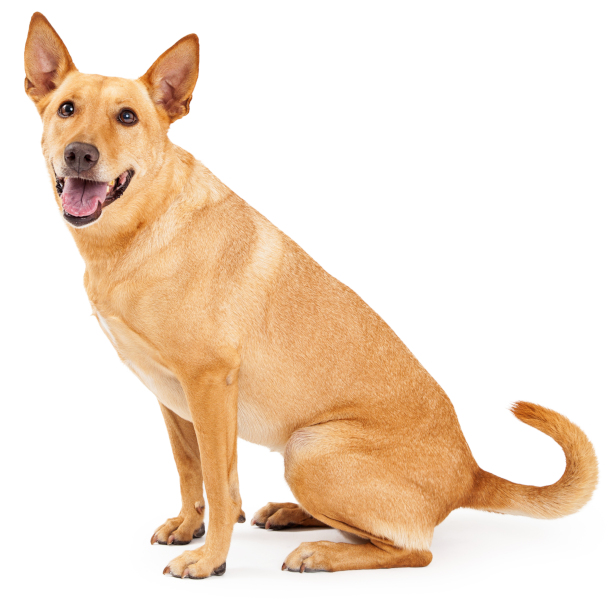 Dr. Pedersen has collaborated on a number of studies that have documented genetic diversity within indigenous (village) dog populations across the Middle East, main-land SE Asia, and Island SE Asia and Pacific. It was shown that village dogs in these regions have been randomly interbreeding for 3,000 to over 12,000 years before present and have retained the genetic diversity of the earliest dogs. In contrast, this genetic diversity has been largely packaged into smaller pieces over the last several hundred years within the various modern breeds. The question is whether all of the genetic diversity found in indigenous dogs still exists among the totality of modern breeds, or if a considerable amount has been lost with the extensive inbreeding that has gone into breed development.
- View Publications
Pedersen NC, Dhanota JK, Liu H. Polymorphisms in ERAP1 and ERAP2 are shared by Caninae and segrate within and between random- and pure-breeds of dogs. Veterinary Immunology and Immunopathology. 2016. October 15; 179:46. http://www.sciencedirect.com/science/article/pii/S0165242716301520.
Pedersen NC, Pooch AS, Liu H. A genetic assessment of the English bulldog.
Canine Genetics and Epidemiology. 2016 Jul 29;3:6. https://www.ncbi.nlm.nih.gov/pmc/articles/PMC4965900/.Pedersen NC, Liu H, Leonard A, Griffioen L. A search for genetic diversity
among Italian Greyhounds from Continental Europe and the USA and the effect of inbreeding on susceptibility to autoimmune disease. Canine Genetics and Epidemiology. 2015 Oct 30;2:17. https://www.ncbi.nlm.nih.gov/pmc/articles/PMC4628233/.Pedersen NC, Brucker L, Tessier NG, Liu H, Penedo MC, Hughes S, Oberbauer A,Sacks B. The effect of genetic bottlenecks and inbreeding on the incidence of two major autoimmune diseases in standard poodles, sebaceous adenitis and Addison's disease. Canine Genetics and Epidemiology. 2015 Aug 27;2:14. https://www.ncbi.nlm.nih.gov/pmc/articles/PMC4579369/.
Pedersen N, Liu H, Theilen G, Sacks B. The effects of dog breed development on genetic diversity and the relative influences of performance and conformation breeding. Journal of Animal Breeding & Genetics. 2013, 130 236–248
Brown SK, Pedersen NC, Jafarishorijeh S, Bannasch DL, Ahrens KD, Wu JT, Okon M, Sacks BN. Phylogenetic distinctiveness of middle eastern and southeast Asian village dog Y chromosomes illuminates dog origins. PLoS One. e28496.Epub 2011 Dec 14.
Runstadler JA, Angles JM, Pedersen NC. Dog leucocyte antigen class II diversity and relationships among indigenous dogs of the island nations of Indonesia (Bali), Australia and New Guinea. Tissue Antigens. 2006, 68, 418-26.
Angles JM, Kennedy LJ, Pedersen NC. Frequency and distribution of alleles of canine MHC-II DLA-DQB1, DLA-DQA1 and DLA-DRB1 in 25 representative American Kennel Club breeds. Tissue Antigens. 2005, 66, 173-84
Puja IK, Irion DN, Schaffer AL, Pedersen NC. The Kintamani dog: genetic profile of an emerging breed from Bali, Indonesia. .Journal of Heredity. 2005, 96, 854-9.
Bannasch DL, Bannasch MJ, Ryun JR, Famula TR, Pedersen NC. Y chromosome haplotype analysis in purebred dogs. Mammalian Genome. 2005, 16, 273-80.
Irion DN, Schaffer AL, Grant S, Wilton AN, Pedersen NC. Genetic variation analysis of the Bali street dog using microsatellites. BMC Genetics. 2005, 6, 6.
Neff MW, Robertson KR, Wong AK, Safra N, Broman KW, Slatkin M, Mealey KL, Pedersen NC. Breed distribution and history of canine mdr1-1Delta, a pharmacogenetic mutation that marks the emergence of breeds from the collie lineage. Proceedings of the National Academy of Sciences of the United States of America. 2004, 101, 11725-30.
Irion DN, Schaffer AL, Famula TR, Eggleston ML, Hughes SS, Pedersen NC. Analysis of genetic variation in 28 dog breed populations with 100 microsatellite markers. Journal of Heredity. 2003, 94, 81-7.
Autoimmune Disorders in Dogs
Dr. Pedersen has also been heavily involved with research into the genetic basis of autoimmune disorders of dogs. The incidence and diversity of autoimmune disorders has been steadily rising over the last several decades and especially among purebred dogs in general and in certain breeds more than others. This increase has been associated with a narrowing of genetic diversity in the major histocompatibility complex (MHC) region of dogs (known as the DLA in dogs). Research to date has concentrated on the Akita, Pug Dog, Italian Greyhound, and the Standard Poodle.
- View Publications
Pedersen N, Liu H, Theilen G, Sacks B. The effects of dog breed development on genetic diversity and the relative influences of performance and conformation breeding. Journal of Animal Breeding & Genetics. 2013, 130 236–248.
Pedersen NC, Liu H, McLaughlin B, Sacks BN. Genetic characterization of healthy and sebaceous adenitis affected Standard Poodles from the United States and the United Kingdom. Tissue Antigens. 2012, 80, 46-57.
Pedersen NC and Kennedy, LJ. A Genetic Comparison of Standard and Miniature Poodles based on autosomal markers and DLA class II haplotypes. http://www.vetmed.ucdavis.edu/ccah/local-assets/pdfs/Miniature_Poodle_genetic_comparison_May-23-2012.pdf. This was a study funded by the Poodle Club of America Foundation to establish whether genetic diversity of Standard Poodles could be increased by outcrossing with Miniature Poodles.
Pedersen NC, Liu H, Greenfield DL, Echols LG. Multiple autoimmune diseases syndrome in Italian Greyhounds: preliminary studies of genome-wide diversity and possible associations within the dog leukocyte antigen (DLA) complex. Veterinary Immunology and Immunopathology. 2012, 145, 264-76.
Safra N, Pedersen NC, Wolf Z, Johnson EG, Liu HW, Hughes AM, Young A, BannaschDL. Expanded dog leukocyte antigen (DLA) single nucleotide polymorphism (SNP)genotyping reveals spurious class II associations. Veterinary Journal. 2011, 189, 220-6.
Pedersen N, Liu H, Millon L, Greer K. Dog leukocyte antigen class II-associated genetic risk testing for immune disorders of dogs: simplified approaches using Pug dog necrotizing meningoencephalitis as a model. Journal of Veterinary Diagnostic Investigation. 2011, 23, 68-76.
Greer KA, Wong AK, Liu H, Famula TR, Pedersen NC, Ruhe A, Wallace M, Neff MW. Necrotizing meningoencephalitis of Pug dogs associates with dog leukocyte antigen class II and resembles acute variant forms of multiple sclerosis. Tissue Antigens. 2010, 76, 110-8.
Angles JM, Famula TR, Pedersen NC. Uveodermatologic (VKH-like) syndrome in American Akita dogs is associated with an increased frequency of DQA1*00201. Tissue Antigens. 2005, 66, 656-65.
Pedersen NC. A review of immunologic diseases of the dog. Veterinary Immunology and Immunopathology. 1999, 69, 251-342.
Studies on autoimmune disorders, especially in Standard Poodles and Italian Greyhounds, continue and additional DNA samples from dogs affected by one or more autoimmune disorders, healthy siblings or parents, or from lines of Italian Greyhounds or Standard Poodles deemed to be free of autoimmune conditions are still needed. More details on some of these studies can be found on the UC Davis Center for Companion Animal Health website.
During the course of Dr. Pedersen’s research into autoimmune diseases he has also been able to identify the causative mutations, or strong genetic associations, that identify Italian Greyhounds that suffer from or are at high risk for several simple recessive genetic diseases, including enamel hypoplasia, progressive retinal atrophy and glaucoma. Genetic tests for each of these diseases have been made available by the Veterinary Genetics Laboratory.
- View Publications
- Gandolfi B, Liu H, Griffioen L, Pedersen NC. Simple recessive mutation in ENAM is associated with amelogenesis imperfecta in Italian Greyhounds. Animal Genetics. 2013, 44, 569-78.
Feline
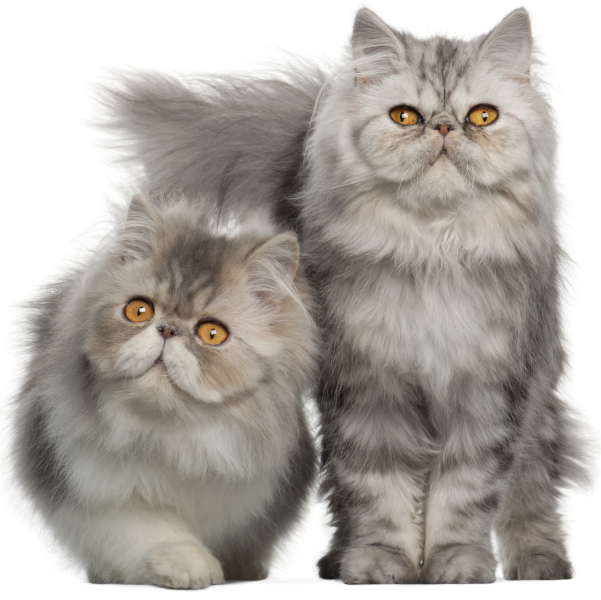 Dr. Pedersen has also maintained a significant research program into the genetics of cats. His primary interest has involved in identifying potential genetic associations with resistance to a highly fatal and common infectious disease of cats, feline infectious peritonitis (FIP). This resistance involves both genetic factors involved with host immunity, as well as viral genetic factors that influence virus/host interactions.
- View Publications
Watanabe R, Eckstrand C, Liu H, Pedersen NC. Characterization of peritoneal cells from cats with experimentally-induced feline infectious peritonitis (FIP) using RNA-seq. Veterinary Research. 2018, 49, 81. doi: 10.1186/s13567-018-0578-y.
Pedersen NC, Kim Y, Liu H, Galasiti Kankanamalage AC, Eckstrand C, Groutas WC, Bannasch M, Meadows JM, Chang KO. Efficacy of a 3C-like protease inhibitor in treating various forms of acquired feline infectious peritonitis. Journal of Feline Medicine and Surgery, 2018, 20, 378-392.
Murphy BG, Perron M, Murakami E, Bauer K, Park Y, Eckstrand C, Liepnieks M, Pedersen NC. The nucleoside analog GS-441524 strongly inhibits feline infectious peritonitis (FIP) virus in tissue culture and experimental cat infection studies. Veterinary Microbiology. 2018, 219, 226-233.
Kim Y, Liu H, Galasiti Kankanamalage AC, Weerasekara S, Hua DH, Groutas WC, Chang KO, Pedersen NC. Reversal of the Progression of Fatal Coronavirus Infection in Cats by a Broad-Spectrum Coronavirus Protease Inhibitor. PLoS Pathogy. 2016, 12, doi: 10.1371/journal.ppat.1005531.
Pedersen NC, Liu H, Durden M, Lyons LA. Natural resistance to experimental
feline infectious peritonitis virus infection is decreased rather than increased by positive genetic selection. Veterinary Immunology and Immunopathology. 2016 Mar;171:17-20. http://www.sciencedirect.com/science/article/pii/S0165242716300022.Pedersen NC, Eckstrand C, Liu H, Leutenegger C, Murphy B. Levels of feline infectious peritonitis virus in blood, effusions, and various tissues and the role of lymphopenia in disease outcome following experimental infection. Veterinary Microbiology. 2015, 175, 157-166.
Pedersen NC, Liu H, Gandolfi B, Lyons LA. The influence of age and genetics on natural resistance to experimentally induced feline infectious peritonitis. Veterinary Immunology and Immunopathology. 2014 Nov 15;162(1-2):33-40. http://www.sciencedirect.com/science/article/pii/S0165242714001998.
Golovko L, Lyons LA, Liu H, Sørensen A, Wehnert S, Pedersen NC. Genetic susceptibility to feline infectious peritonitis in Birman cats. Virus Research. 2013, 175, 58-63.
Pedersen NC, Liu H, Scarlett J, Leutenegger CM, Golovko L, Kennedy H, Kamal FM. Feline infectious peritonitis: role of the feline coronavirus 3c gene in intestinal tropism and pathogenicity based upon isolates from resident and adopted shelter cats. Virus Research. 2012, 165, 17-28.
Pedersen NC, Liu H, Dodd KA, Pesavento PA. Significance of coronavirus mutants in feces and diseased tissues of cats suffering from feline infectious peritonitis. Viruses. 2009, 1, 166-84.
Vennema H, Poland A, Foley J, Pedersen NC. Feline infectious peritonitis viruses arise by mutation from endemic feline enteric coronaviruses. Virology. 1998, 243, 150-7.
Poland AM, Vennema H, Foley JE, Pedersen NC. Two related strains of feline infectious peritonitis virus isolated from immunocompromised cats infected with a feline enteric coronavirus. Journal of Clinical Microbiology. 1996, 34, 3180-4.
Pedersen NC. Virologic and immunologic aspects of feline infectious peritonitis virus infection. Advances in Experimental Medicine and Biology. 1987;218, 529-50.
In addition to genetic research into FIP, Dr. Pedersen has collaborated on several other studies involving genetic diversity of domestic cats as well as simple genetic diseases.
- View Publications
Jones BR, Little S, Lyons LA, Malik R, Nicholas F, O'Brien DP, Pedersen NC. Understanding genetics: why should vets care? Journal of Feline Medicine and Surgery. 2015, 17,201-2
Alhaddad H, Gandolfi B, Grahn RA, Rah HC, Peterson CB, Maggs DJ, Good KL, Pedersen NC, Lyons LA. Genome-wide association and linkage analyses localize a progressive retinal atrophy locus in Persian cats. Mammalian Genome. 2014 Aug; 25(7-8), 354-62. http://link.springer.com/article/10.1007/s00335-014-9517-z
Lipinski MJ, Froenicke L, Baysac KC, Billings NC, Leutenegger CM, Levy AM, Longeri M, Niini T, Ozpinar H, Slater MR, Pedersen NC, Lyons LA. The ascent of cat breeds: genetic evaluations of breeds and worldwide random-bred populations. Genomics. 2008, 91, 12-21.